


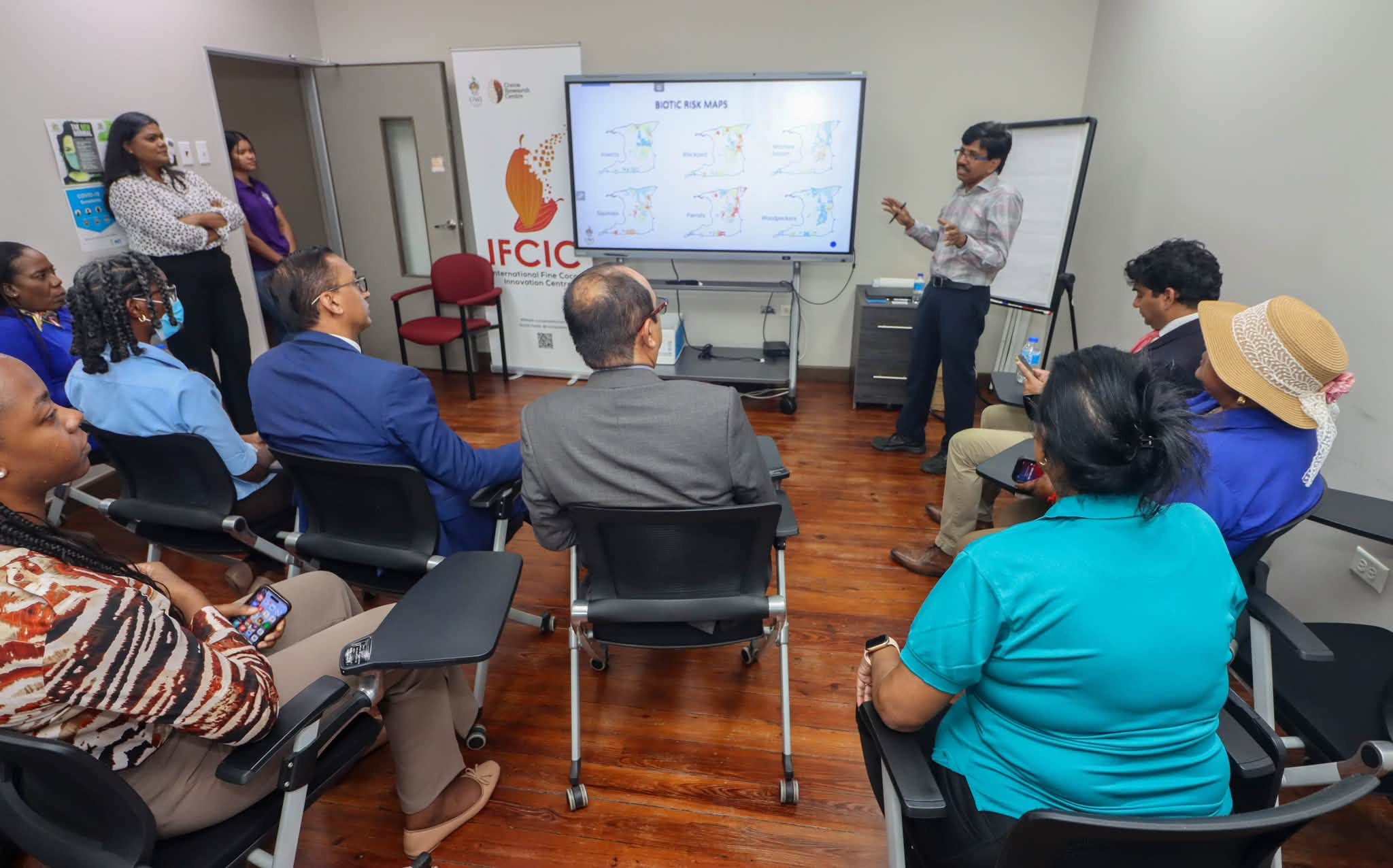
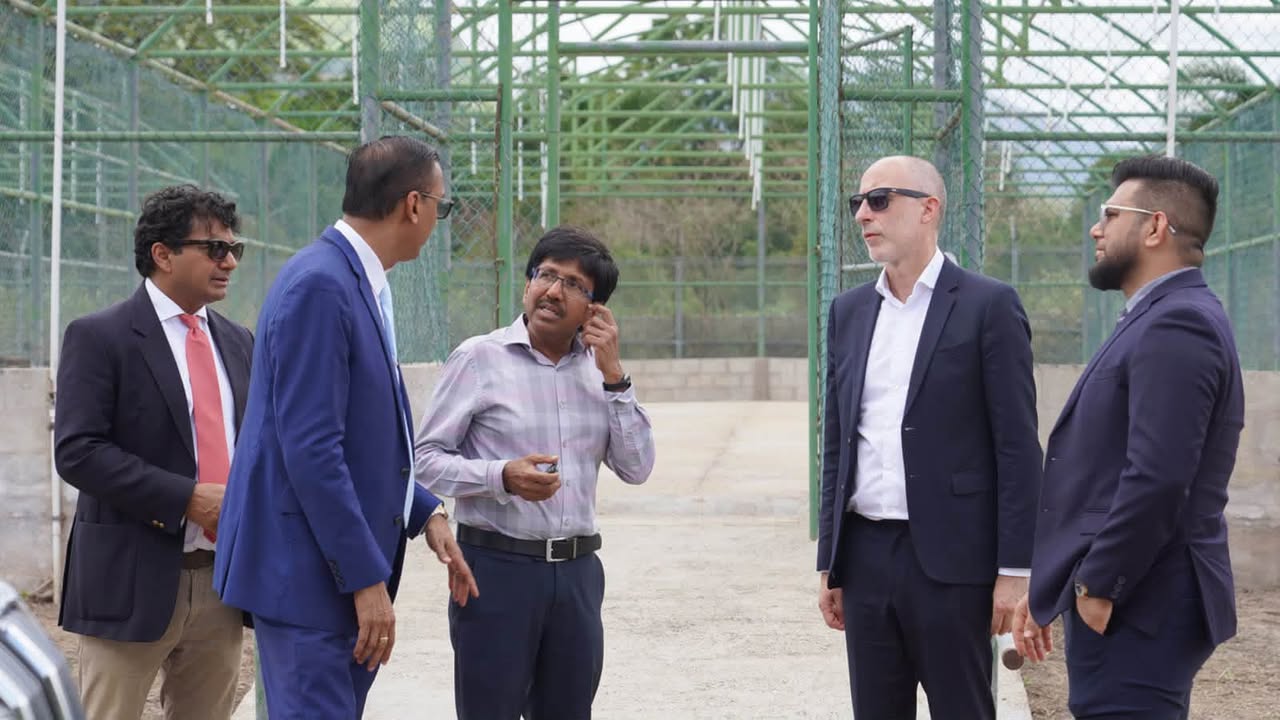
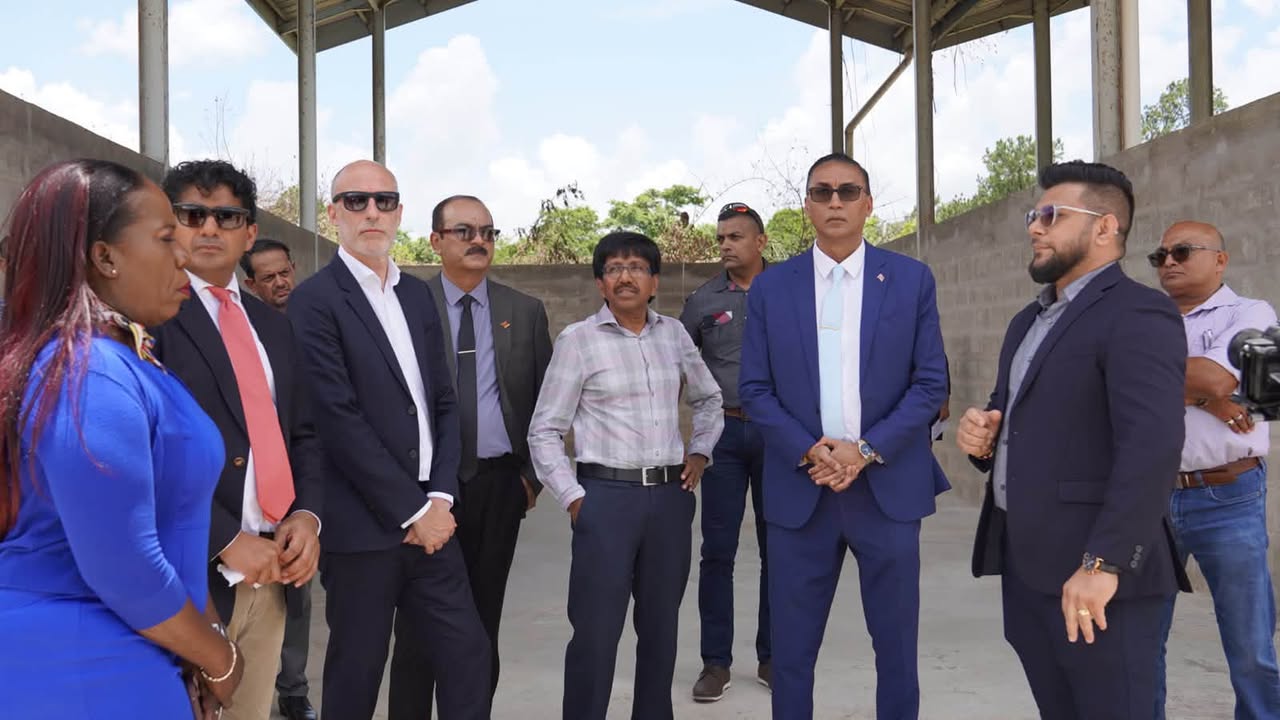
Today’s proceedings concluded with a tour of the Cocoa Research Centre, including the Chocolate Factory and the Cocoa Molecular Breeding Programme site.
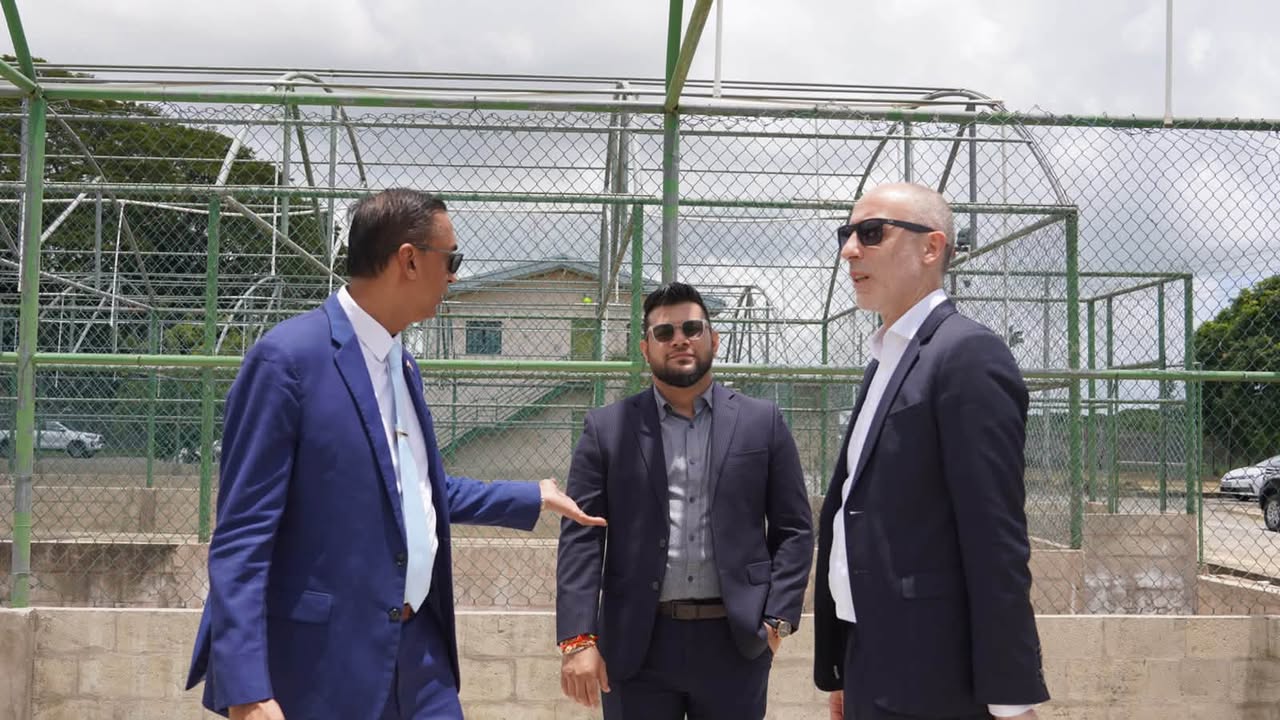
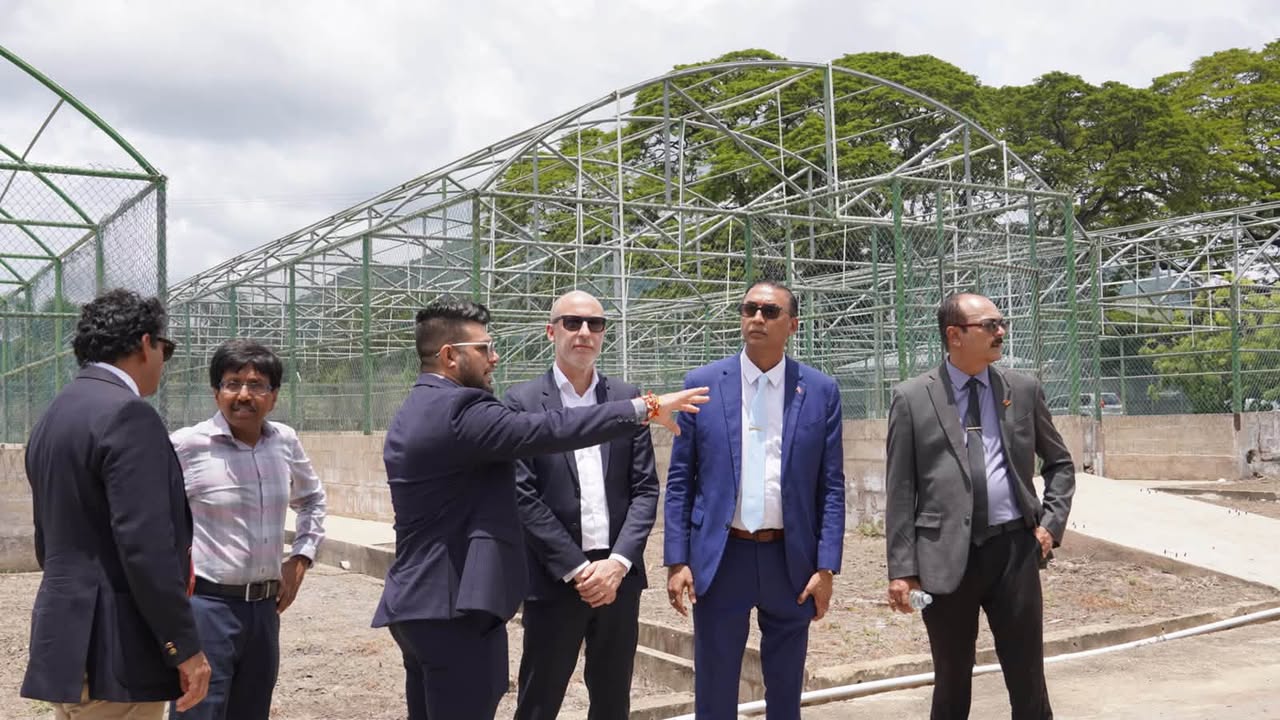
Senator the Honourable Ravi Ratiram, Minister of Agriculture and Fisheries, toured the facilities alongside Ms. Michelle Anne Thomas, Permanent Secretary, and His Excellency Jon Mark Dean, High Commissioner of the United Kingdom to Trinidad and Tobago, Mr. Shankar Teelucksingh, Chair of the Cocoa Development Company of Trinidad and Tobago Limited (CDCTTL), Mr. Rajesh Lal, CEO, CDCTTL and Directors of the CDCTTL.
The tour followed a presentation by Professor Umaharan Pathmanan, Director, Cocoa Research Centre, on the development of Trinidad and Tobago’s cocoa sector and provided an opportunity to explore areas for collaboration to further strengthen Trinidad and Tobago’s cocoa industry.
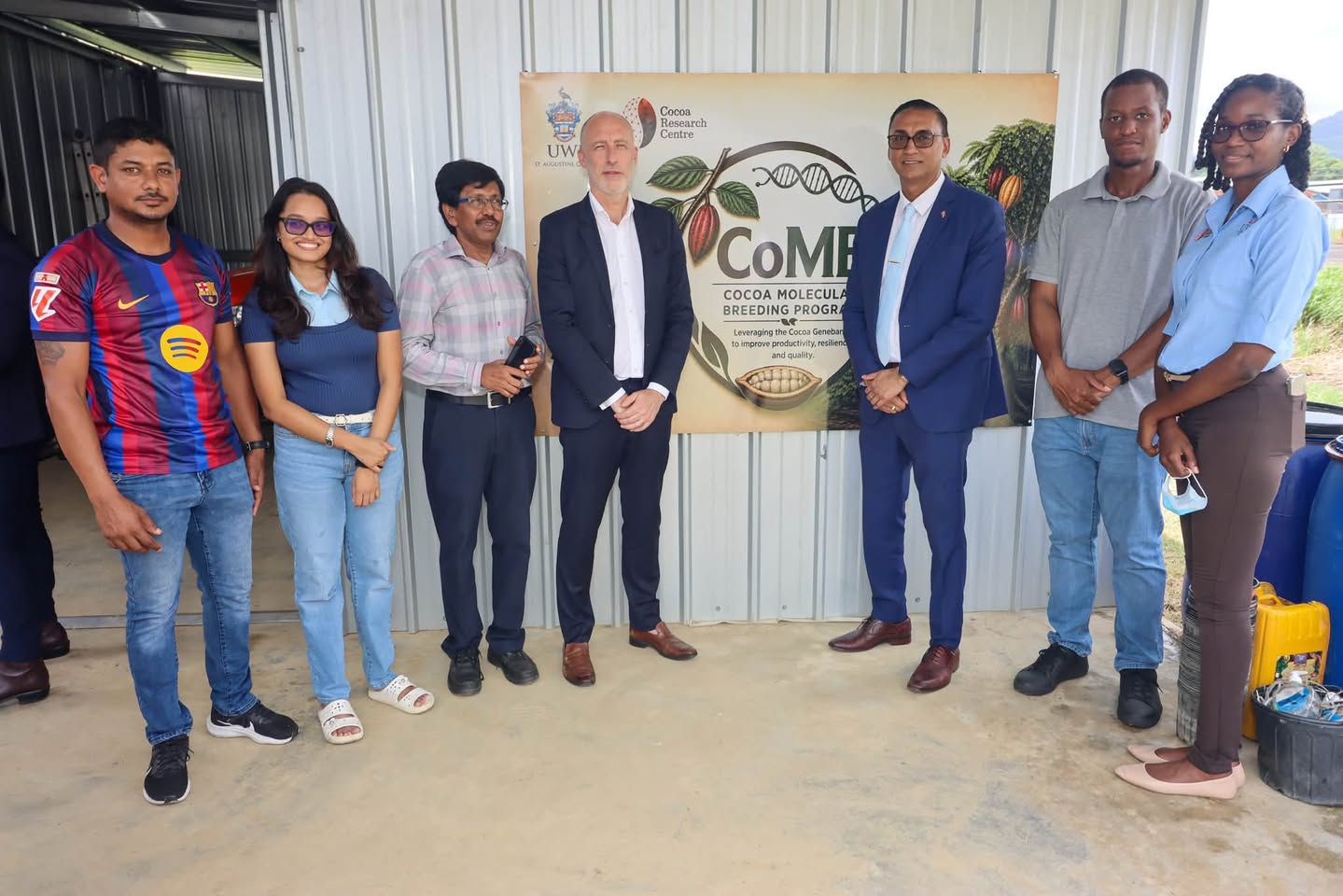
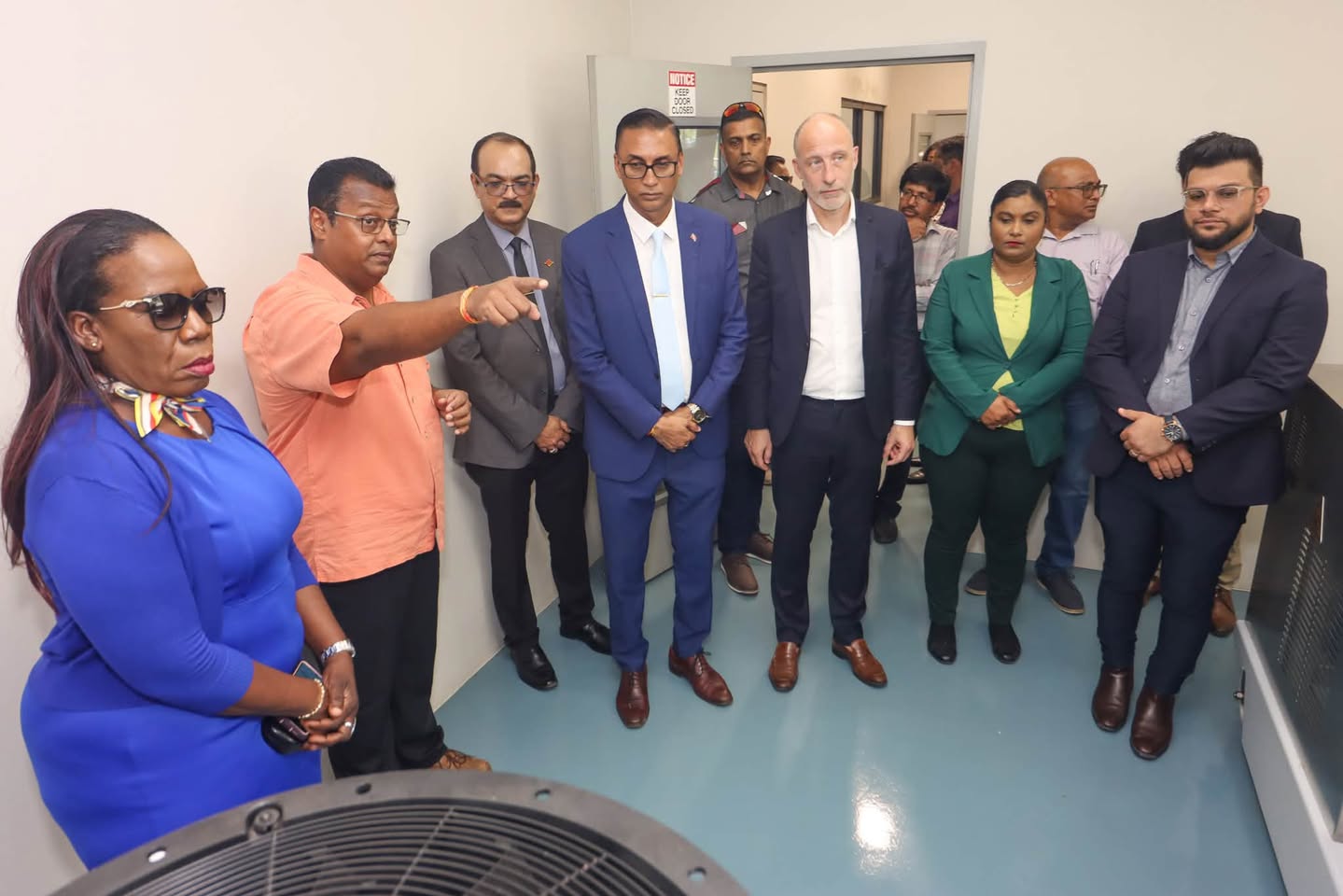
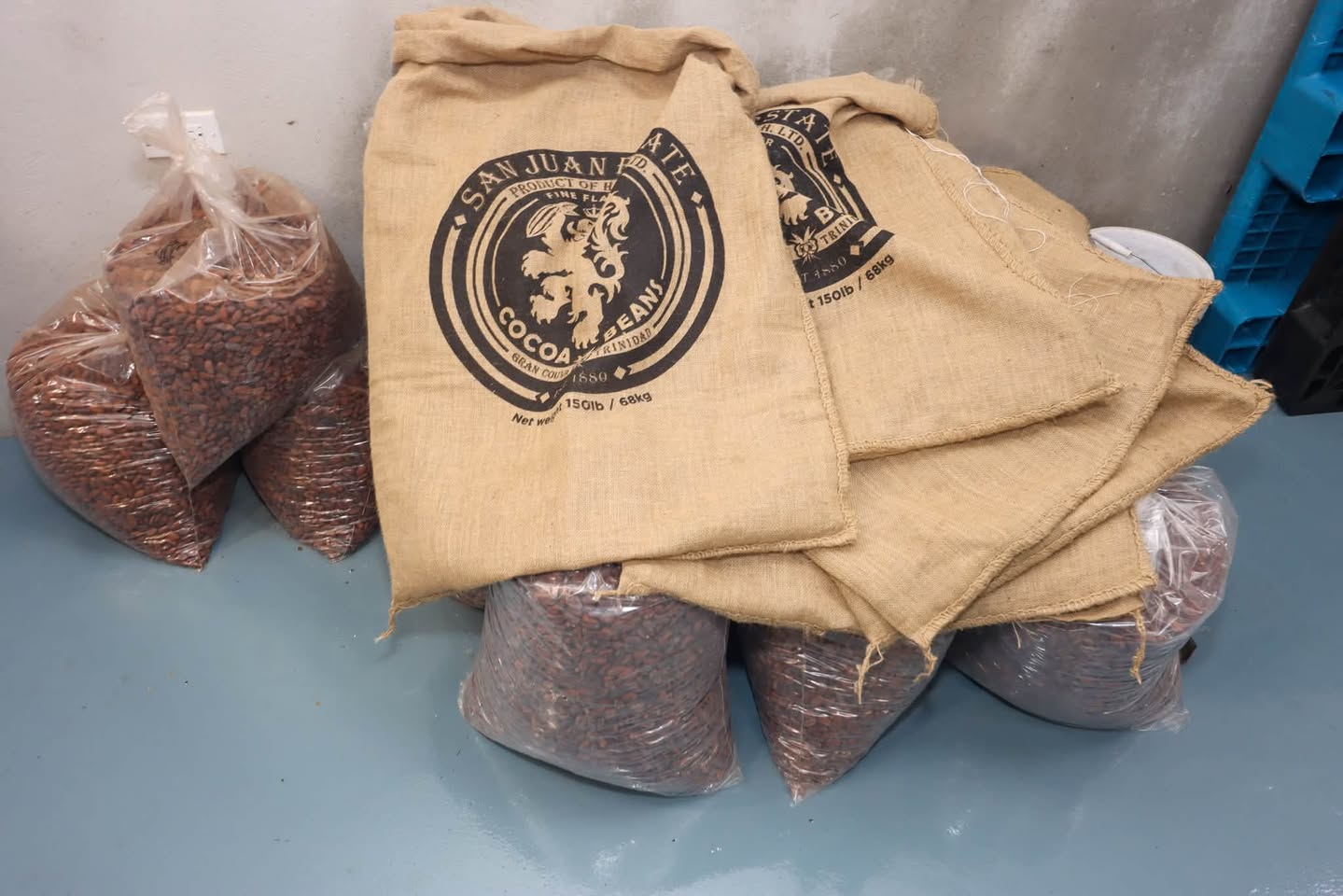
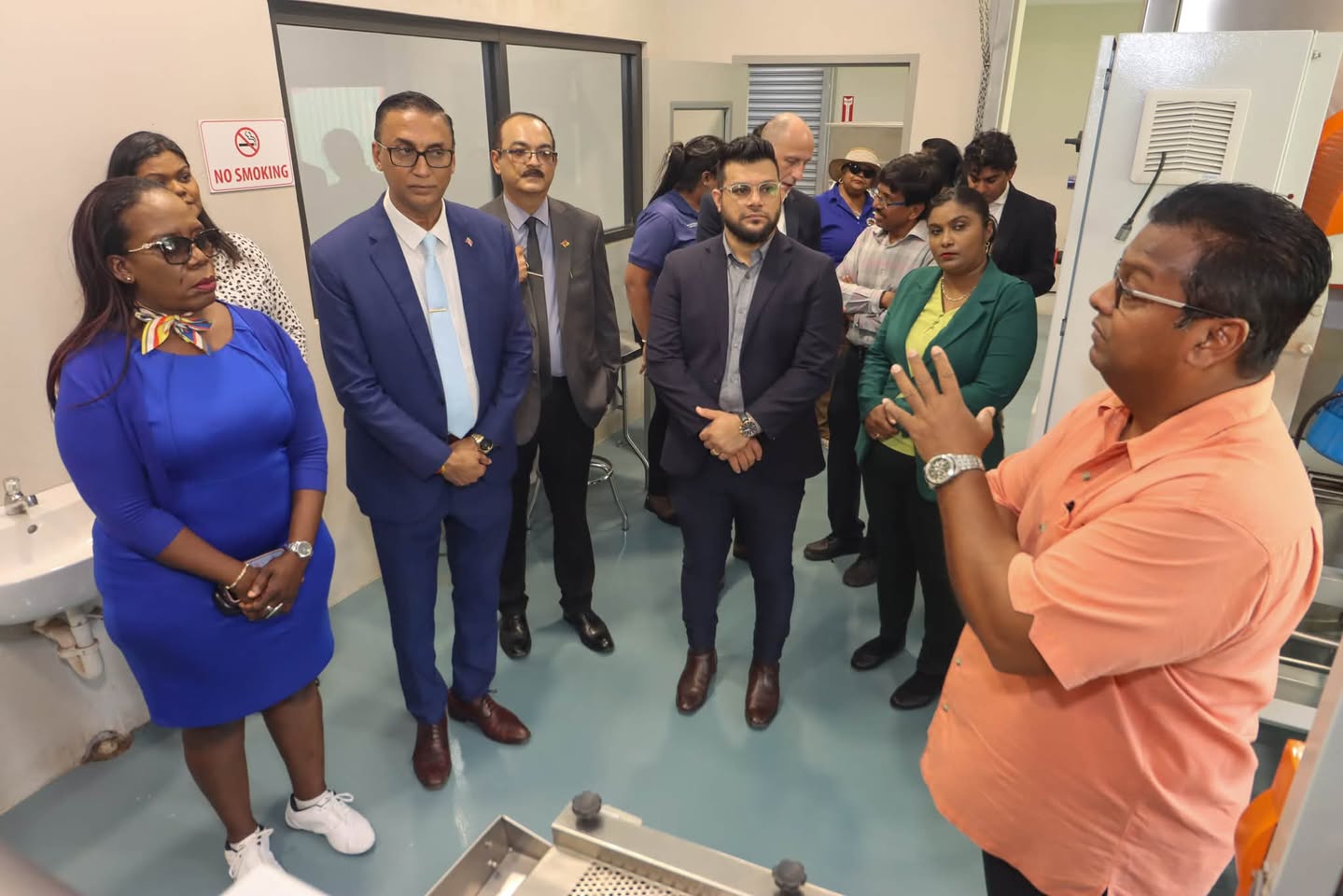
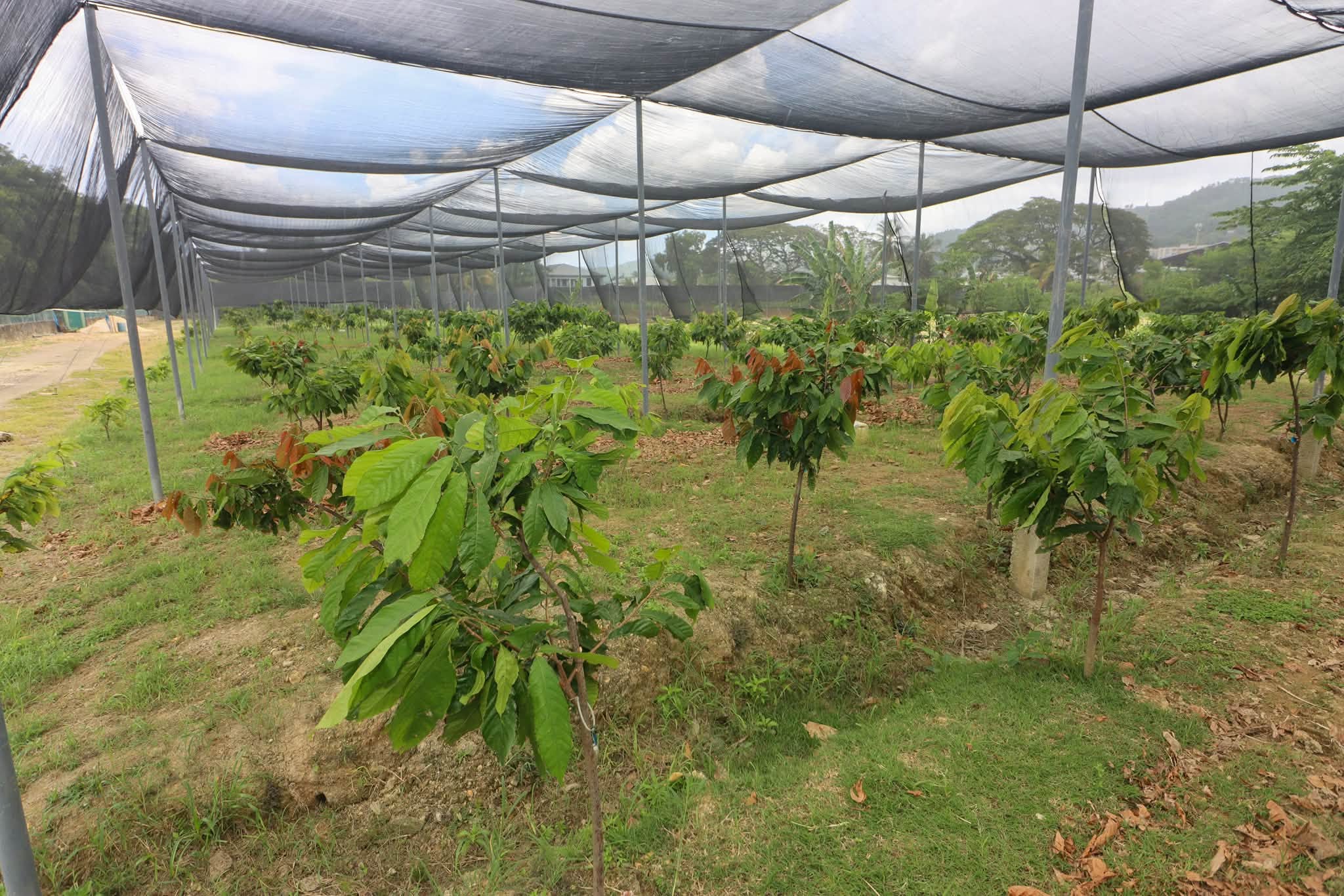
Today’s tour continues at the St Augustine Nurseries, with Senator the Honourable Ravi Ratiram, Minister of Agriculture and Fisheries, alongside Ms. Michelle Anne Thomas, Permanent Secretary, His Excellency Jon Mark Dean,High Commissioner of the United Kingdom to Trinidad and Tobago, Mr. Shankar Teelucksingh, Chair of the Cocoa Development Company of Trinidad and Tobago Limited (CDCTTL), Prof. Pathmanathan Umaharan, Deputy Chair of CDCTTL, Mr. Rajesh Lal, CEO, CDCTTL and Directors of the CDCTTL.
The visit forms part of ongoing efforts to strengthen bilateral relations and explore opportunities for collaboration in agriculture and the development of Trinidad and Tobago’s agricultural sector.
ePhyto is short for “electronic phytosanitary certificate”. An ePhyto is the electronic equivalent of a paper –based phytosanitary certificate with all relevant information now contained in this format. The ePhyto Certificates is produced in accordance with International Standards for Phytosanitary Measure( ISPM) 12.
The International Plant Protection Convention (IPPC) is an intergovernmental treaty signed by over 180 countries, including Trinidad and Tobago aiming to protecting the world’s plant resources from the spread and introduction of pests, and promoting safe trade. The Convention introduced International Standards for Phytosanitary Measures (ISPMs) as its main tool to achieve its goals, making it the sole global standard setting organization for plant health.
In 2020, Trinidad and Tobago registered with the IPPC ePhyto Solutions and began generating test certificates to exchange in the ePhyto Hub. The testing of the system continued throughout 2021 with the addition of ’live’ exchanges of certificates and the re-issuance of re-export certificates. The overall objective of the exercise was to establish a paperless exchange of fraud-resistant electronic phytosanitary certificates quickly, accurately, and at a very low cost. Over that time several ePhyto industry workshops/awareness sessions were conducted with participants of several interest groups, these included, public and private sectors along with key industry stakeholders.
These training sessions were facilitated by Mr. Michael Perry, Export Specialist from the USDA, Animal & Plant Health Inspection Service (APHIS), Plant Protection & Quarantine (PPQ) and member of the IPPC ePhyto Steering Group. Mr. Perry is currently providing the necessary technical guidance to the Agriculture Ministry, importers, exporters, trade associations on the benefits of adopting the IPPC ePhyto Solution and its migration onto the Single Electronic Window (SEW) platform.
Trinidad and Tobago has now fully transitioned to the ‘live’ exchange of ePhyto certificates using the IPPC Hub for all commercial consignments. The electronic exchange of certificates and accompanying documents for plants and plant products import/export is a significant step for this country in improving trade efficiency, thereby reducing the time and cost of conveying paper documentation through freight and third-party services and in so doing, making agricultural trade flow, smoother, safer and cheaper.
Furthermore, it reduces the protracted issues of non-compliances which arise due to misplacement or late submission of original phytosanitary certificates. The IPPC ePhyto solution also assists in the harmonization which is required for international best practices by creating homogenous conditions for trade; improved security; ability to address certification problems in advance of commodity arrival and resource planning prior to commodity arrival.
If you have questions about ePhyto or phytosanitary certificates, contact the Plant Quarantine Unit, Research Division, Ministry of Agriculture, Land and Fisheries. Email plantquarantine.centeno@gov.tt


Agriculture Minister: “I am immensely proud of each of you, for turning your passion in agriculture into a livelihood’’
Minister of Agriculture, Land and Fisheries, Senator the Honourable Kazim Hosein said that he was immensely proud of persons who have turned their passion for agriculture into a livelihood. The Minister’s remarks came while he was addressing thirty-four (34) recipients at an Agro-Incentive Grant Cheque Distribution Ceremony earlier today, (Monday 11th April, 2022) at the MALF Head Office in Chaguanas.
Minister Hosein added, “I was very pleased to see the different areas in which this grant will be utilized to provide agricultural support to farmers, from infrastructural upgrades for livestock, to purchase of equipment like a cassava planter and root crop harvester, to the establishment of a conventional hydroponics system.”
Also in attendance at the event were the Minister in the Ministry of Agriculture, Land and Fisheries, Senator the Honourable Avinash Singh, Permanent Secretary (Ag.), Ms. Susan Shurland and members of the Agro incentive Grant Committee.
About the Agricultural Finance Support Programme or commonly referred to as the ‘Agro-Incentive Grant’, it is a programme designed to assist farmers in acquiring new techniques, equipment and technology to upgrade their existing facility and was launched by the Agriculture Ministry in October 2018.
For information on the Agricultural Finance Support Programme, please click on the following link:
The Ministry of Agriculture, Land and Fisheries has noted the comments made in a recent social media post on the use of the Wildflower Park which is under the remit of the Horticultural Services Division. The Ministry is in the process of conducting an internal investigation on the alleged claims.
The policy position of the Ministry for persons wishing to use the Wildflower Park and the Royal Botanic Gardens for any passive recreational activities, for example large group gatherings or photo-shoots, is that they must first obtain written permission from the Horticultural Services Division prior to their scheduled date of the event.
The Ministry of Agriculture, Land and Fisheries (MALF) continues to encourage persons to adhere to the advertised guidelines, strategically placed at both the Royal Botanic Gardens and Wildflower Park in accordance with the Botanic Gardens Act, Chapter 41:03.
The MALF has always worked closely on a professional level with stakeholders from both the public/private sector and therefore has no sole allegiance to any particular interest group/s.
Both the Wildflower Park and the Royal Botanic Gardens remain accessible to the national community at all times, with persons generally conducting themselves in a responsible manner and complying with the regulations for its use.

Assalaamu ‘Alaikum (peace be unto you). On behalf of the Ministry of Agriculture, Land and Fisheries and as a member of the Muslim community, I wish to extend Ramadan greetings to my brothers and sisters in Islam both at home and across the world.
In the name of Allah, the Most Gracious, the Most Merciful. All praise and gratitude are due to Almighty Allah Subhānahu wa Ta’ala (swt), who, through His infinite grace and mercy has blessed us with the opportunity to witness yet another Holy month of Ramadan. Peace and blessings be upon our Noble Prophet Muhammad, the Seal of the Prophets and Chief of the Messengers, and upon all his family and companions.
As we welcome this blessed month of Ramadan, it provides us the opportunity to reap rich rewards from our Creator and Sustainer, Almighty Allah (swt) by fasting during the day and engaging in extra Ibādat (acts of worship) at night. During this month, the Holy Qur’ān was revealed to our Prophet Muhammad Sallallāhu ‘alaihi wa Sallam, as a guide to mankind. It is a time for thanksgiving as the mercy and forgiveness of Allah (swt) descend upon His servants.
Salmaan reports: ‘On the last day of Sha’baan, the Messenger of Allah (swt) addressed us and said: “O People, there comes upon you now a great month, a most blessed month in which lies a night greater in worth than one thousand months. It is a month in which Allah (swt) has made compulsory that the fasting should be observed by day; and He has made the taraweeh (prayer) by night a sunnah (way of life). Whosoever tries drawing nearer to Allah (swt) by performing any virtuous deed in this month, for him shall be such reward as if he had performed a fard (obligatory observance) in any other time of the year. And whoever performs a fard for him shall be the reward of seventy fard in any other time of the year.”
I want to encourage my fellow Muslims to be especially generous during this Holy month. In addition to Zakaah (almsgiving), let us give whatever we can wholeheartedly to help those in dire need in our communities and by extension to those experiencing hardships across the world. Let us also pay our Sadaqatul Fitr (obligatory dues) very early in Ramadan so that it can reach those families that would be unable to enjoy Eid.
As we join with our family and friends in deepen prayer and reflection, I urge my Muslim brothers and sisters to make full use of this blessed month by fasting, participating in communal Iftār – the breaking of the fast, filling the Masjid during the nights of Ramadan, engaging in extra forms of Ibādah (servitude) such as Tarawiih and Nafl Salawāt, reading the Qur’ān and performing Fard Salawāt in congregation.
Though the impacts of the Covid-19 pandemic continue to impact us all, we remain grateful for the opportunity to worship and reflect on the teachings of Islam, reinforcing the importance of the five (5) pillars of Islam; Faith (Shahadah), Prayer (Salah), Fasting (Sawm), Almsgiving (Zakat) and Pilgrimage (Hajj).
During this month of Ramadan, let us be generous and forgiving to our family, friends and our communities at large. Clear our hearts from anger, complaints, suspicion, jealousy, grudges or dislike. Be extra kind, accommodating, courteous, supportive and helpful to all persons that you may encounter. Let us also instil into our children and the younger generations the values and teachings of Islam, especially the importance of charity and showing compassion to others. While we engage in a period of fast, we understand the blessings and sustenance that we receive from the Almighty and it is paramount for all of us, Muslims and non-Muslims to continue working together in ensuring food security.
On behalf of the Ministry of Agriculture, Land and Fisheries and myself, I am pleased to extend to the Muslim community, and by extension the national community, a blessed and peaceful Ramadan Mubarak. I pray that Almighty Allah (swt) will shower His choicest blessings upon us and our families, as we welcome this blessed Month. May our Ramadan be a rewarding and successful one. Ameen.
Ramadan Mubarak!
Click here for the PDF version.


